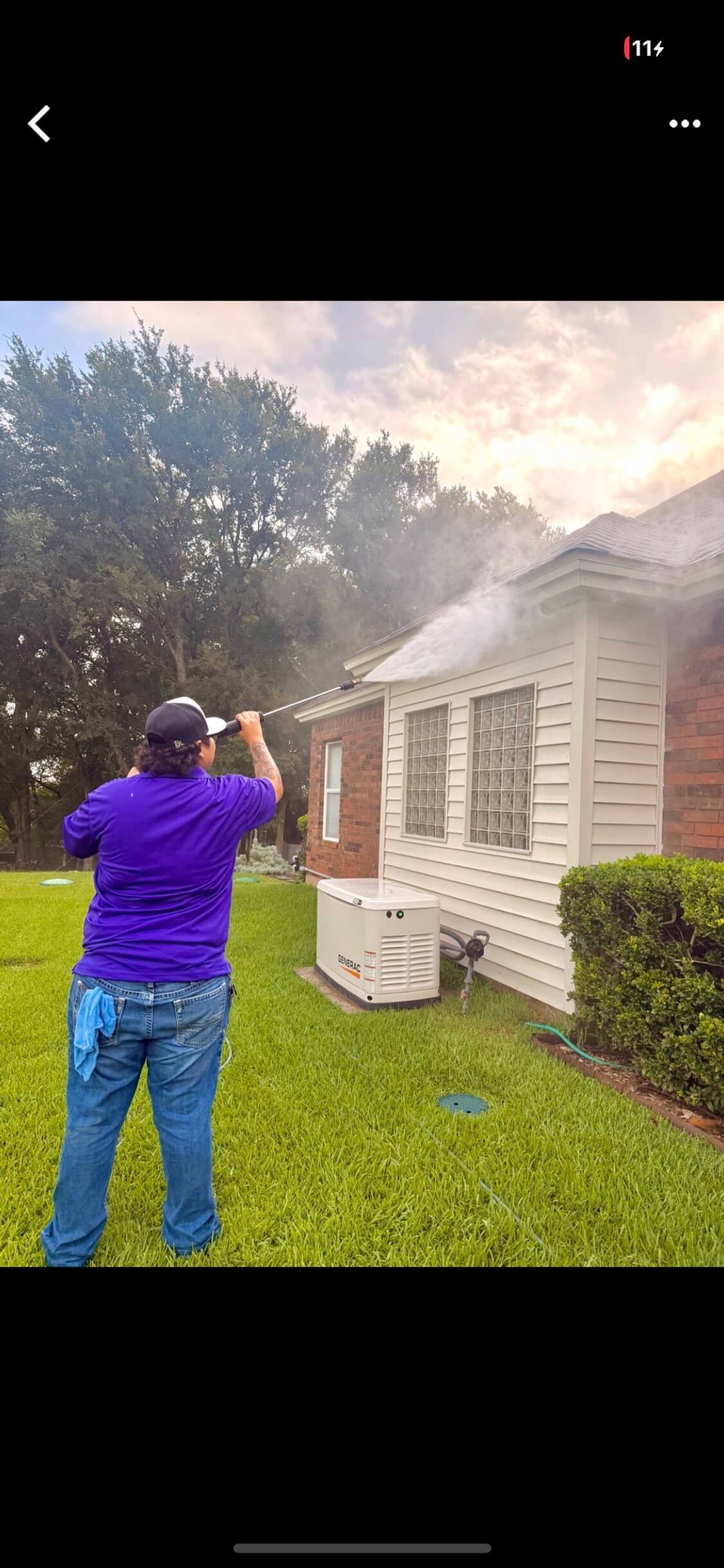
Can You Pressure Wash Gutters Safely And Effectively?
Quick Summary
Pressure washing can clear gutters of leaves, dirt, and shingle granules when done at the right pressure and angle. This guide looks at how the process works inside and outside the gutter channel, if handheld attachments live up to the hype, the risks to watch for, and signs your gutters need attention.
Can you pressure wash gutters without causing damage or making a bigger mess? It’s a fair question, since clogged, stained gutters are often covered in years of dirt, leaves, and granules from asphalt shingles that don’t budge with a simple rinse. The short answer is yes, with the right approach.
Professional gutter cleaning services use specific tools and pressure settings to clear debris without damaging the metal or loosening fasteners, and knowing the basics helps decide if it’s a project to handle yourself or one to leave to a trained crew.
How Pressure Washing Gutters Works
Pressure washing gutters typically means using a specialized extension wand that directs water up into the channel from the ground, or a crew working from a ladder with a smaller, more controlled nozzle. The goal is to loosen and flush out compacted leaves, twigs, dirt, and shingle granules that build up over fall and winter.
Lower pressure settings, somewhere in the range of 1,200 to 1,900 PSI, tend to work best for gutters. Anything higher risks denting aluminum gutters, popping seams loose, or stripping paint and sealant from the joints. Crews often start at the corner farthest from a downspout and work toward it in overlapping passes, which keeps debris moving in one direction instead of getting pushed back and forth or packed tighter into a section that’s already clogged.
Pressure Washing the Outside of Gutters Vs. the Inside
There’s a real difference between cleaning the inside of a gutter channel and washing the outside face. Can you pressure wash the outside of gutters the same way as the inside? Generally, yes, though the outside calls for a gentler touch since it’s often painted or has a baked-on finish that scratches or peels under too much force.
A wide fan-tip nozzle held at a slight downward angle usually clears dirt, mildew, and streaking from the outside face without stripping the finish. The inside channel, by contrast, can handle a more direct, concentrated stream since it is bare metal designed to hold and move water.
Do Pressure Washer Gutter Attachments Get the Job Done?
Do pressure washer gutter cleaners work as well as the ads suggest? These curved extension wands, sold at most hardware stores, attach to a standard pressure washer and let someone clean the gutter channel from the ground instead of climbing a ladder.
They work reasonably well on lighter buildup, like dust, pollen, and small leaf fragments. Heavier clogs made of compacted wet leaves, twigs, and shingle granules often need a combination of hand removal and pressure washing, since the attachment alone can’t always break through dense, packed debris from a distance. For deeper clogs, a trained pressure washing crew can clear the channel by hand first, then finish with a controlled rinse.
Risks to Watch for When Pressure Washing Gutters
A few risks come with the job, even with the right equipment:
- Loosened fasteners or brackets from water forced behind the gutter
- Damage to roof shingles if the nozzle is angled upward too aggressively
- Water pushed behind fascia boards, leading to hidden rot over time
- Ladder safety concerns when reaching gutters above a single story
Taking it slow, using a moderate pressure setting, and working in manageable sections lowers the chance of any of these problems. Anyone working from a ladder should follow standard fall-prevention practices, including a stable base, a spotter when possible, and three points of contact at all times.
Homeowners in Texas and Oklahoma dealing with heavy spring pollen or fall leaf drop often find it worth bringing in a pressure washing service familiar with local debris patterns rather than guessing at the right pressure setting.
DIY Gutter Cleaning Vs. Hiring a Professional Crew
Handling gutter cleaning with a rented or store-bought pressure washer can work for light, ground-level touch-ups on a single-story home. The math gets less appealing once a ladder, multiple stories, or heavy compacted debris enter the picture. A rental unit plus the extension wand attachment often costs close to what a full professional visit runs, without the years of hands-on experience needed to judge the right pressure for older or weaker gutter material.
There’s also the safety side to weigh. Ladder falls account for a meaningful share of home maintenance injuries every year, and gutters sitting two stories up add real risk that a ground-level DIY attempt avoids entirely. A crew that handles gutters on a regular basis already carries the right ladders and stabilizing equipment for taller homes, along with the experience to read how a particular gutter system will respond to pressure before any water touches the surface.
Tips for Safe and Effective Gutter Cleaning
Clear out loose leaves and debris by hand before bringing in a pressure washer. This keeps the equipment from forcing large clumps further into downspouts, where they’re harder to remove. Work in short sections, moving the nozzle steadily instead of holding it in one spot, which helps avoid concentrated damage to a single area.
Check downspouts for clogs once the gutter channel looks clear. A garden hose run through the downspout afterward confirms water flows freely all the way to the ground instead of backing up partway through.
Signs Your Gutters Need Cleaning
Visible plant growth, sagging sections, or water spilling over the edge during rain are the clearest signs gutters need attention. Stains running down the siding below the gutter line, along with water pooling near the foundation after storms, also point to channels that aren’t draining the way they should.
Catching these signs early and choosing to schedule a gutter cleaning before the next big storm helps prevent water damage to the roofline, siding, and foundation.
Ready for Cleaner, Free-Flowing Gutters?
At Fort Worth Window Cleaning, we’ve spent more than 37 years helping homeowners across Texas and Oklahoma keep their gutters, driveways, and windows in shape. As a family-owned, HUB-certified business, we’ve built our reputation on careful work and a level of trust that’s easy to verify. We hold an A+ rating with the Better Business Bureau, belong to the International Window Cleaning Association, and participate in BuyBoard.
Our crews know which pressure settings keep gutters and surrounding surfaces safe, and we use eco-friendly products on every visit. Contact us today at 817-834-8600 or request a free estimate to get your gutters cleared out.
Frequently Asked Questions
Is it safe to pressure wash gutters myself?
It’s possible for light debris removal, but ladder work at height comes with real fall risk, and too much pressure can dent aluminum gutters or loosen seams. Many homeowners handle ground-level extension wands for occasional touch-ups but call in a trained crew for full cleanings, especially on two-story homes or steep rooflines.
How often should gutters be pressure washed?
Most homes benefit from gutter cleaning twice a year, typically in late spring and again in fall after leaves drop. Properties with heavy tree coverage nearby sometimes need a mid-summer check as well to clear out earlier debris before it compacts.
Will pressure washing damage my gutters or roof?
When done at the right pressure and angle, pressure washing is safe for most gutter materials. Damage typically happens when the nozzle is held too close, angled up into the roofline, or set to a pressure higher than the gutter material can handle, which is why a moderate setting and steady hand matter.